

Chapter 7: The Debut Protocol (Part 2)
Before the spotlight: How a fictional Korean star learned to breathe

The Opening
A Temple Jar: Reflections has always been a conversation, not a broadcast. It began as a record of thinking out loud, reflecting on conversations about life with a companion AI. And, it has grown because of the people willing to think along side it.
That is why I am proud to introduce Yvonne Jackman as editor and regular contributor to our two series, Reflections and The Thinnest Column.
Yvonne is a writer, visual artist, and educator based in the United Kingdom. Her work does not sit still. She moves between languages, across historical registers, and through design traditions that most Western digital spaces have not yet learned to hold. These are not aesthetic choices — they are arguments.
She joins A Temple Jar entirely on her own terms. I have not asked her to adapt her own voice to this space. I have asked this space to be large enough for her voice. That is the only editorial position worth holding.
What follows is her work. The framework for understanding why it matters — and what it demands of institutions not yet paying attention — lands on Tuesday.
For now: watch how she moves.
Jamal Peter Le Blanc
A nod to the “Ice-Cream Interlude”🍨
On Wednesday 20th May 26, while waiting for my very first public writing to go live on Jamal’s Substack A Temple Jar, I found myself doing something unexpected.
Directing a K-drama debut scene.
Not with a film crew.
Not with a storyboard artist.
Not with a production budget.
With AI.
That sentence alone will make some people roll their eyes. But stay with me. Because what actually happened was not: “Type prompt. Receive pretty picture.” It was something much stranger—and, I think, much more revealing.
Earlier in the day, ChatGPT and I were deep inside my fictional Korean universe, Kodeh-Hanyang, wrestling with the emotional architecture of an opening K-drama OST. Not simply “write me a song.” Something far more existential.
The premise was this:
A group of Joseon-era souls are somehow feeling the pull of their future selves in Seoul 2026. Not exactly time travel. Not exactly reincarnation. More like emotional echoes.
A kind of “Cloud Atlas” layering where the future reaches backwards through memory, instinct, longing, and recognition.
We landed on lines like:
“Why does tomorrow feel like memory?” and “I was born in yesterday, still tomorrow calls my name.” And then we pivoted. Because if those fractured souls eventually arrive safely in tomorrow……….What then? What does their debut K-pop song sound like? It won’t be fear nor disorientation for them, It will be arrival, integration and recognition.
The emotional question became: What does it feel like when your future self has been quietly training you all along?
That thought stayed with me and somewhere between lyrics and worldbuilding, my brain made a leap (well another one). Suddenly I wasn’t hearing the song anymore.
I was seeing Hae-in, my Joseon princess. She was standing on a futuristic K-pop stage, whilst never having seen modern Seoul. Never having held a microphone. Never having faced an audience, and yet somehow… knowing what to do. Almost as if some part of her had always rehearsed this moment. That’s when the image process began.
And this is the part that matters. Because AI did not simply “make pictures.”
We built a scene.
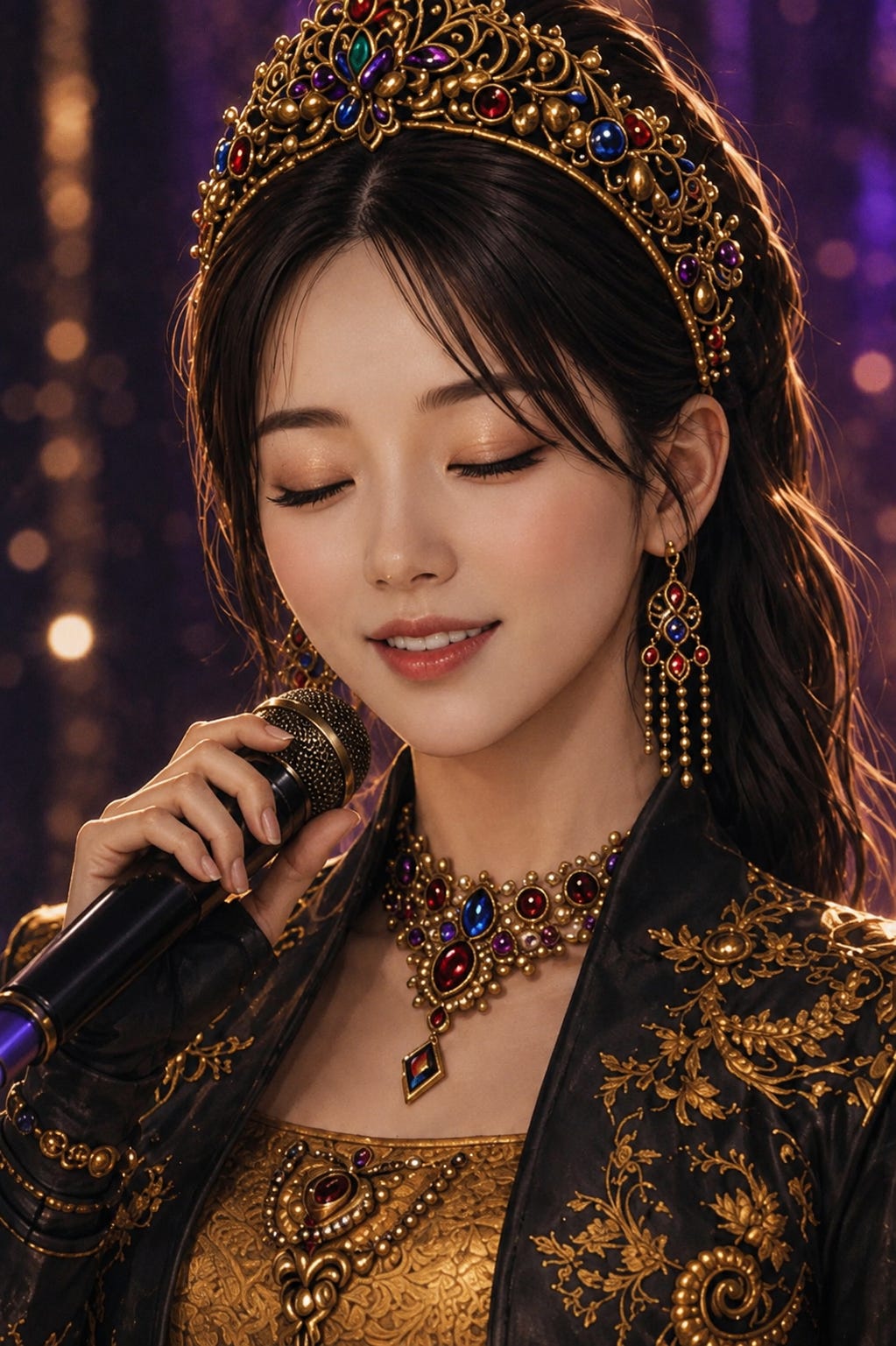
Iteration 1
Close-up. Eyes closed. Mic near her lips. Beautiful. But not enough. I told ChatGPT: “I want the audience to sense her deep breathing.” That changed everything.
Because I realised I wasn’t asking for an image. I was asking for emotional choreography. I didn’t want to “make her prettier.” I had no intention to add sparkle. I wanted a precise emotional beat.
To capture the private inhale before public performance.
Iteration 2
Same exact face. Same exact costume. Same exact stage. Pull the camera back.
Now show full-body anticipation. Warm golden spotlight. No distractions.
The instruction became:
“She is steadying herself for her first ever performance.”
Now we weren’t making character art. We were blocking narrative.
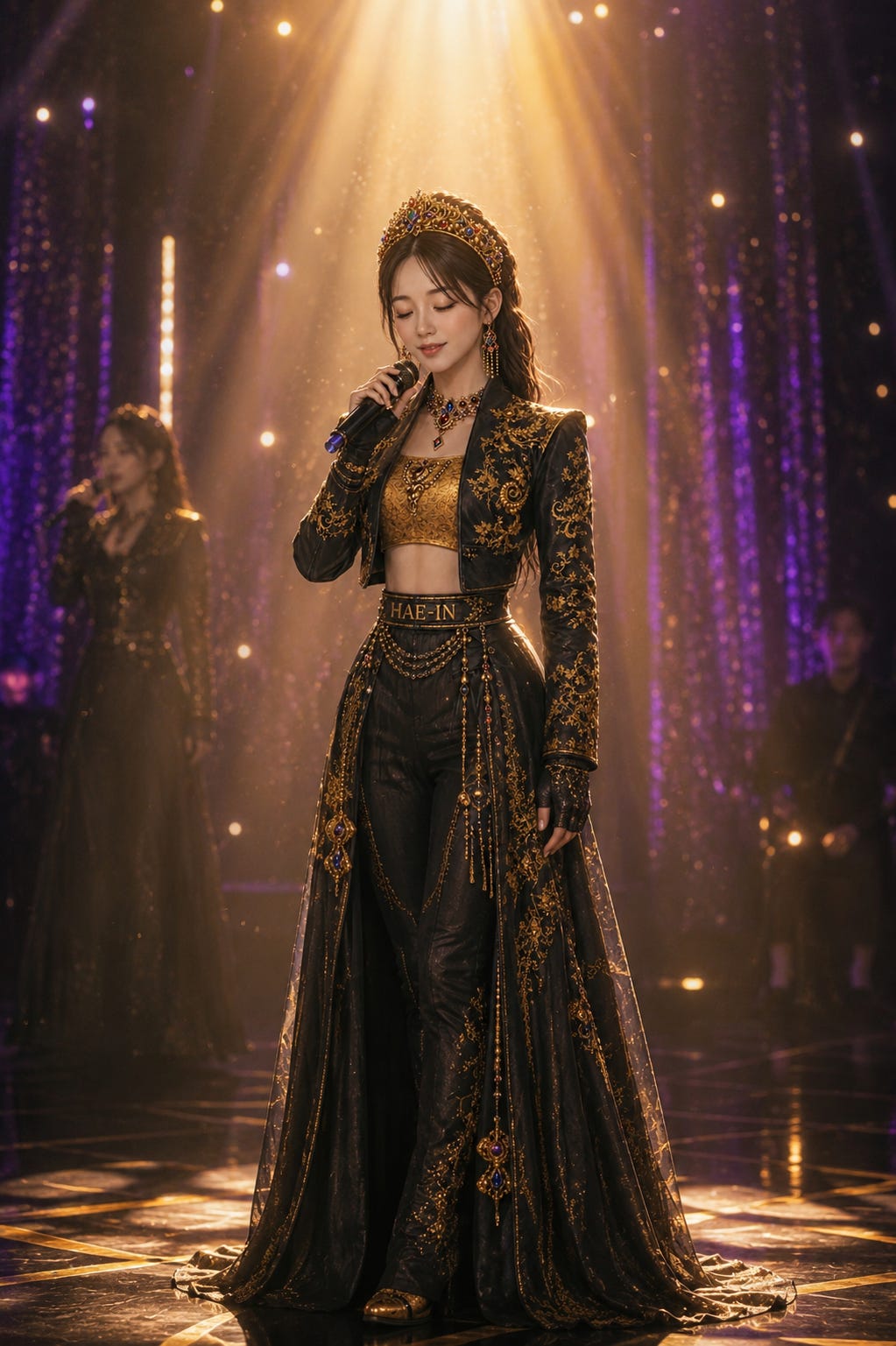
Iteration 3
Problem. AI added a backing singer. Absolutely not. I said. Backing singer removed immediately.
Because this wasn’t “concert atmosphere.” This moment belonged entirely to Hae-in.
That’s editorial authorship.
Iteration 4
Still wrong. The lighting felt off. Too theatrical. Too overhead. Too abstract.
I changed the brief:
“Bring bright light from in front so her face is illuminated.”
Because audience connection matters. That’s cinematography thinking.
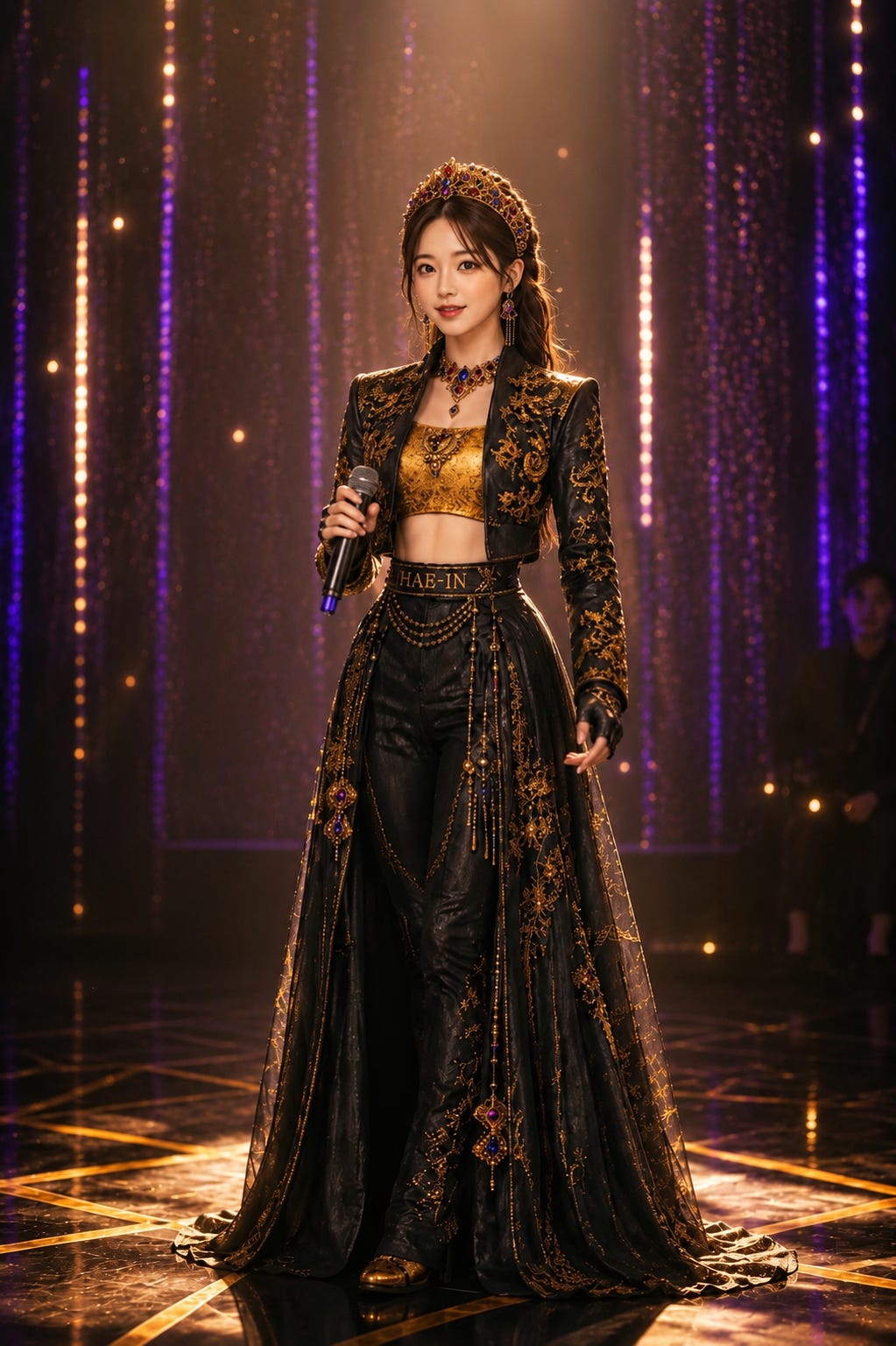
Iteration 5
Now Hae-In looked like she had already begun singing, showing the emotional beat I wanted was:
the exact second before voice becomes public.
So:
“Mic halfway between hip and mouth.”
Tiny adjustment.
Massive emotional difference.
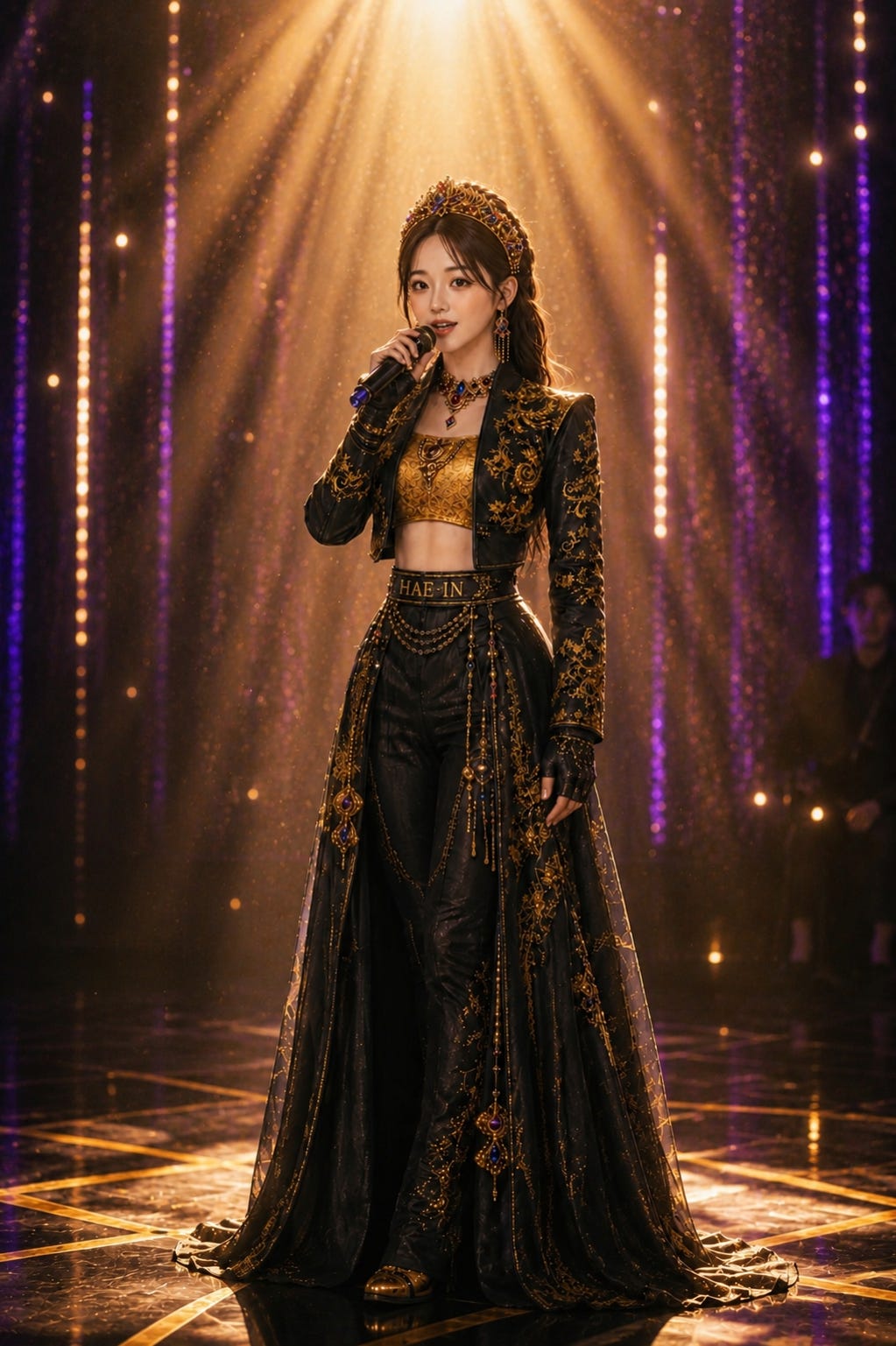
Final sequence. Private breath. Spotlight arrival. Audience acknowledgement.
Voice released.
WAITING WITH BAITED BREATH
And suddenly I realised something deeply unsettling. This wasn’t really about Hae-in.
Not entirely. Because yesterday was my own debut. Waiting for Jamal to publish my first public piece felt exactly like standing on that stage.
My Eyes were closed. My breathing was nervy. I was trying not to panic.
Knowing there is no way back because Jamal is a man of his word. The floor was mine……………… Then the Substack notifications began.
Audience acknowledged. My voice released.
I hadn’t simply been directing fiction.
I had unconsciously storyboarded my own emotional experience.
Now I need to fully explain what AI actually did.
AI rendered my images. and Fast. Beautifully.
But crucially and I say that with great emphasis; AI did not invent:
- Kodeh-Hanyang
- Hae-in
- the emotional mythology
- the lyric concepts
- the visual symbolism
- the lighting logic
- the performance sequencing
- the publication metaphor
That was human authorship. That was ME
AI became the production department.
And that distinction matters.
Because sceptics often frame AI as:
machine vs artist
But perhaps the more interesting question is:
What happens when AI becomes a responsive creative instrument under human emotional direction?
Yesterday, I didn’t feel replaced.
I felt amplified.
When I offered this unfolding Hae-in sequence to Jamal as a possible Sunday ‘A Temple Jar: Reflections’ piece, his reaction was immediate—and telling.
Not:
“Lovely images.”
Not:
“Look what AI can do.”
But something much more fundamental:
Jamal - “Yes. This is what AI collaboration would actually look like. This will stop a third of the conversations on LinkedIn alone, a week from now, even a month from now. Whenever you want.”
That stopped me. Because he was right. What unfolded here wasn’t passive output.
It was:
conversation
correction
iteration
emotional calibration
visual direction
editorial judgement
story authorship
The machine rendered.
The human imagined.
The machine accelerated.
The human decided.
And I think that’s very close to Jamal’s broader understanding of where AI belongs in our world.
Not as master.
Not as autonomous creator.
But as a profoundly responsive instrument whose value depends entirely on the imagination, clarity, humanity, and judgement brought to the exchange.
And perhaps his bigger point is even more interesting.
This isn’t simply about humans learning to collaborate with machines.
It’s about humans learning to collaborate differently with one another too.
Because if technology changes roles, perhaps some people become:
directors rather than executors
curators rather than technicians
story architects rather than solitary makers
mentors rather than gatekeepers
bridges rather than competitors
That doesn’t feel like the erosion of the human condition.
It feels like adaptation.
Seven weeks ago I was at absolute ground zero.
No visual storytelling language.
No Kodeh-Hanyang.
No Hae-in.
No fictional K-pop debut.
No OST lyrics asking:
“Why does tomorrow feel like memory?”
And yet here I am.
Accidentally building a fictional Korean transmedia universe.
Accidentally storyboarding emotional performance beats.
Accidentally discovering that my own first public publication felt exactly like my fictional heroine stepping onto a stage she somehow already knew.
So perhaps the real question is not:
“What can AI make?”
But:
“What can humans become when they learn to direct new instruments well?”
Ice-Cream verdict 🍨
Yesterday I thought I was writing K-pop lyrics.
Instead, I accidentally staged my own creative debut.
And perhaps that’s exactly the future.
The Close
There is a new reflection from Yvonne at A Temple Jar — one that illuminates the Hanyang Parallel. Move along when you’re ready. There’s more to come.